
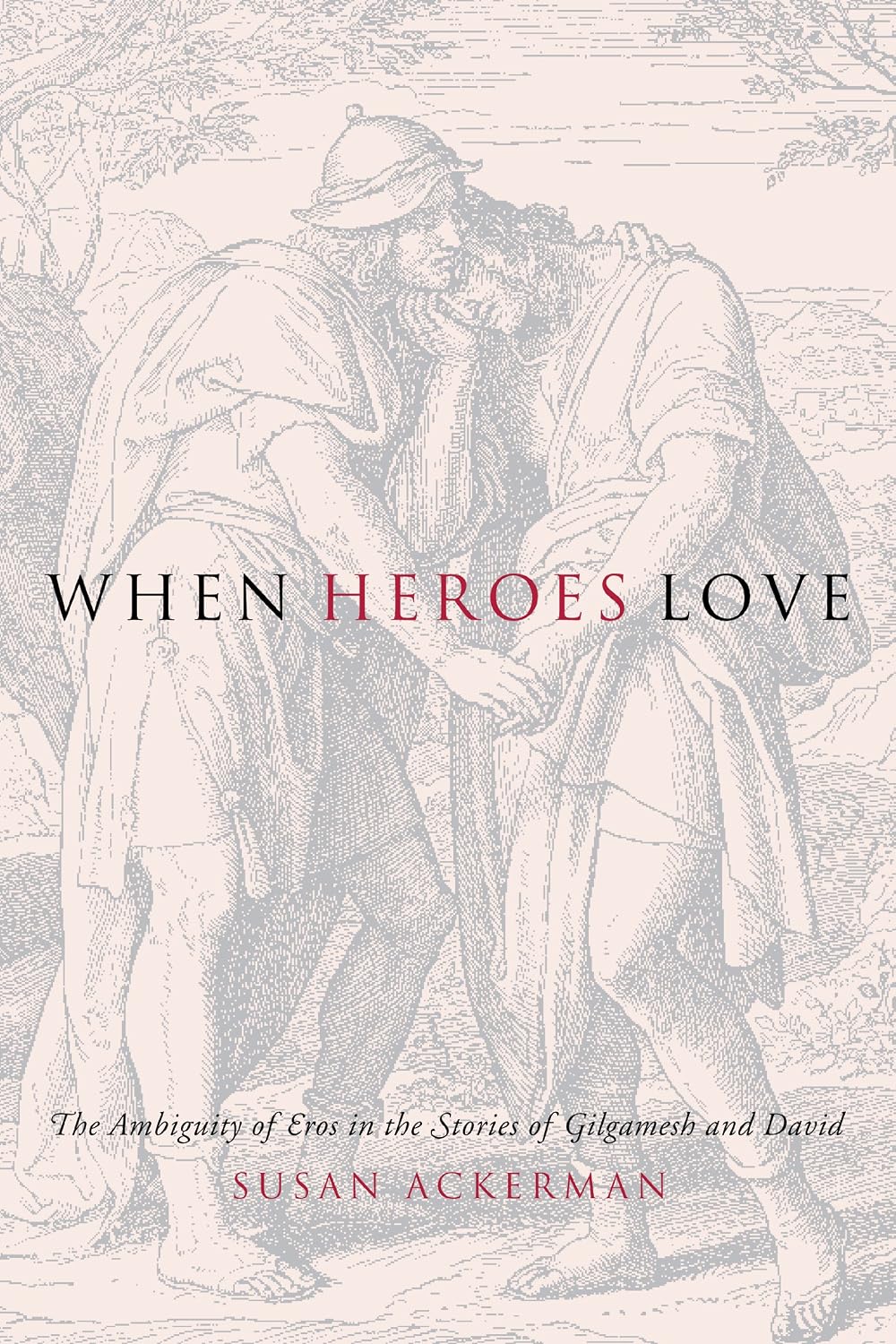
When Heroes Love: The Ambiguity of Eros in the Stories of Gilgamesh and David (Gender, Theory, and Religion)
Product details
| Management number | 233433201 | Release Date | 2026/06/27 | List Price | US$26.51 | Model Number | 233433201 | ||
|---|---|---|---|---|---|---|---|---|---|
| Category | |||||||||
Toward the end of the Mesopotamian Epic of Gilgamesh King Gilgamesh laments the untimely death of his comrade Enkidu, "my friend whom I loved dearly." Similarly in the Bible, David mourns his companion, Jonathan, whose "love to me was wonderful, greater than the love of women." These passages, along with other ambiguous erotic and sexual language found in the Gilgamesh epic and the biblical David story, have become the object of numerous and competing scholarly inquiries into the sexual nature of the heroes' relationships. Susan Ackerman's innovative work carefully examines the stories' sexual and homoerotic language and suggests that its ambiguity provides new ways of understanding ideas of gender and sexuality in the ancient Near East and its literature. In exploring the stories of Gilgamesh and Enkidu and David and Jonathan, Ackerman cautions against applying modern conceptions of homosexuality to these relationships. Drawing on historical and literary criticism, Ackerman's close readings analyze the stories of David and Gilgamesh in light of contemporary definitions of sexual relationships and gender roles. She argues that these male relationships cannot be taken as same-sex partnerships in the modern sense, but reflect the ancient understanding of gender roles, whether in same- or opposite-sex relationships, as defined as either active (male) or passive (female). Her interpretation also considers the heroes' erotic and sexual interactions with members of the opposite sex.Ackerman shows that the texts' language and erotic imagery suggest more than just an intense male bonding. She argues that, though ambiguous, the erotic imagery and language have a critical function in the texts and serve the political, religious, and aesthetic aims of the narrators. More precisely, the erotic language in the story of David seeks to feminize Jonathan and thus invalidate his claim to Israel's throne in favor of David. In the case of Gilgamesh and Enkidu, whose egalitarian relationship is paradoxically described using the hierarchically dependent language of sexual relationships, the ambiguous erotic language reinforces their status as liminal figures and heroes in the epic tradition. Read more
| ASIN | B0092WWHCQ |
|---|---|
| XRay | Not Enabled |
| ISBN13 | 978-0231507257 |
| Language | English |
| File size | 3.8 MB |
| Page Flip | Enabled |
| Publisher | Columbia University Press |
| Word Wise | Not Enabled |
| Print length | 374 pages |
| Accessibility | Learn more |
| Screen Reader | Supported |
| Part of series | Gender, Theory, and Religion |
| Publication date | June 1, 2005 |
| Enhanced typesetting | Enabled |
Bestseller ranking
Politics & Social Sciences


Customers who viewed this product also viewed
Ancient & Classical




Correction of product information
If you notice any omissions or errors in the product information on this page, please use the correction request form below.
Correction Request Form